Being(s) there
Tom Castinel, Tristan Chinal-Dargent, e.n.o.s, LinGe Meng, R. Moreno, Sirag Sesetyan
5 May — 30 May 2026
Beings there
with
Tom Castinel, Tristan Chinal-Dargent, e.n.o.s, LinGe Meng, Rafael Moreno, Sirag Sesetyan
A proposition by
Anna-Livia Albertini, Eli Mompertuis, Rokha Ould Brahim Fall, Salomé Suils, Sofiia Yevlaninkova, étudiantxes en 4ème année à l’École supérieure d’art Clermont Métropole
05 may – 30 may 2026
Opening on tuesday 05 may 2026; 18h30-21h
In partnership with École Supérieure d’art de Clermont Métropole (ESACM) through the Reality of an exhibition program.
“When I say to live, I mean to cohabit, because one is not possible without the other.”¹
In order to fully experience a space, shouldn’t we focus on building connections, paying attention and respect?
“Beings there”, explores both the act of being present as well as the beings present within a space.
During our encounters with artists², questions about domestic spaces and the relationship their inhabitants develop to them first came to our minds. These discussions also sparked a broader reflection on the bonds that form beyond the human realm – between species – within the same environment.We use the term “ living space” to integrate all previous notions all at once. In that sense, a space isn’t just a determined surface, but rather functions as different bonds interwinned together in a knitting dynamic, both human or non-human, which evolve in all kinds of environments.
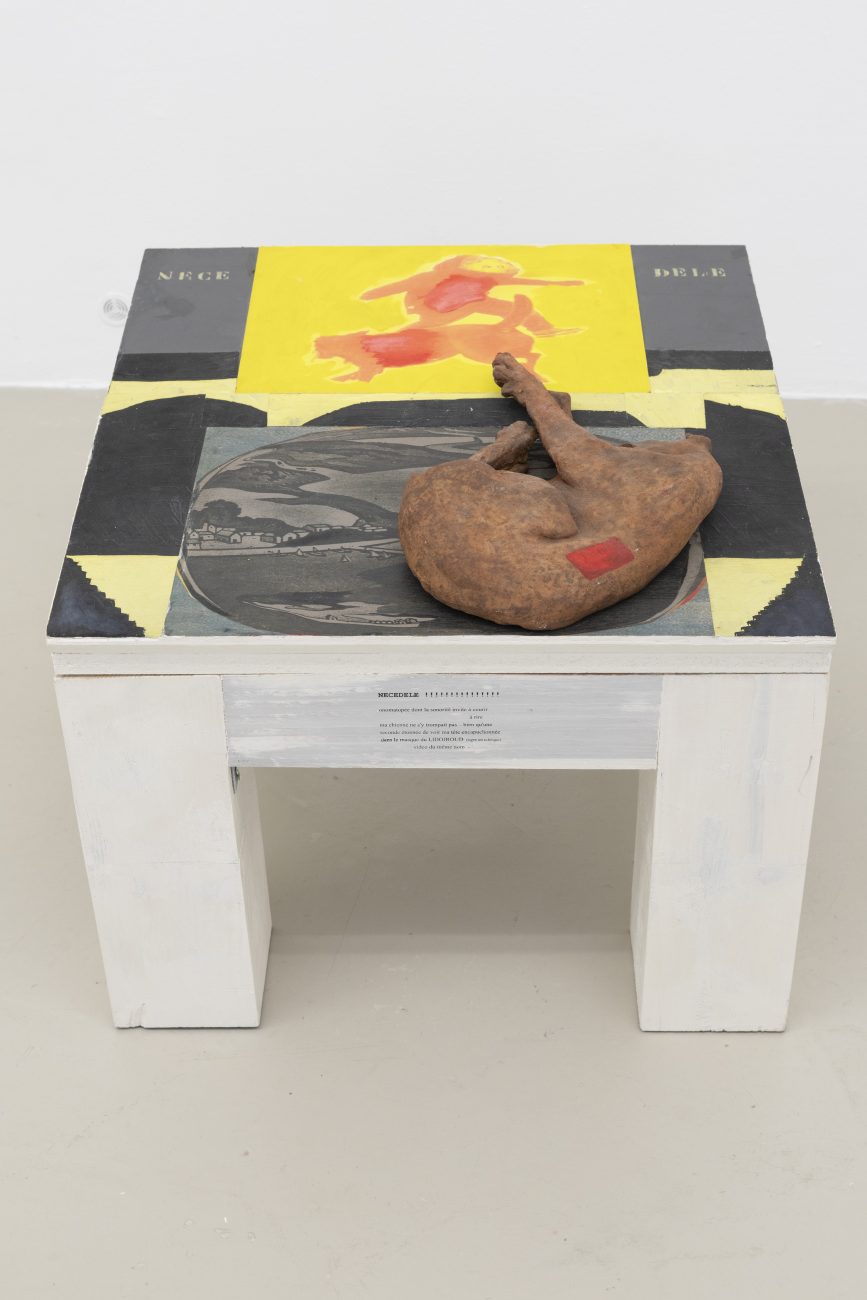
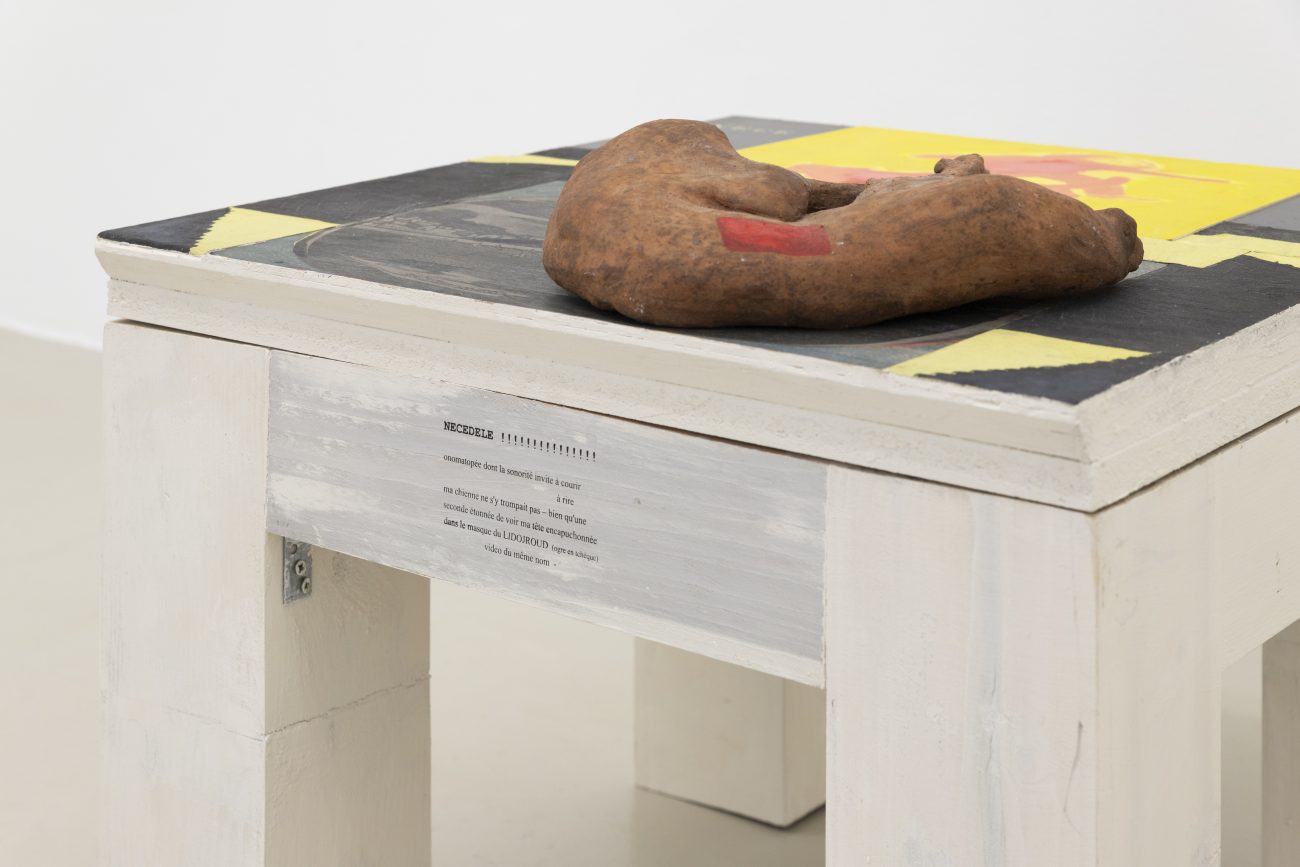
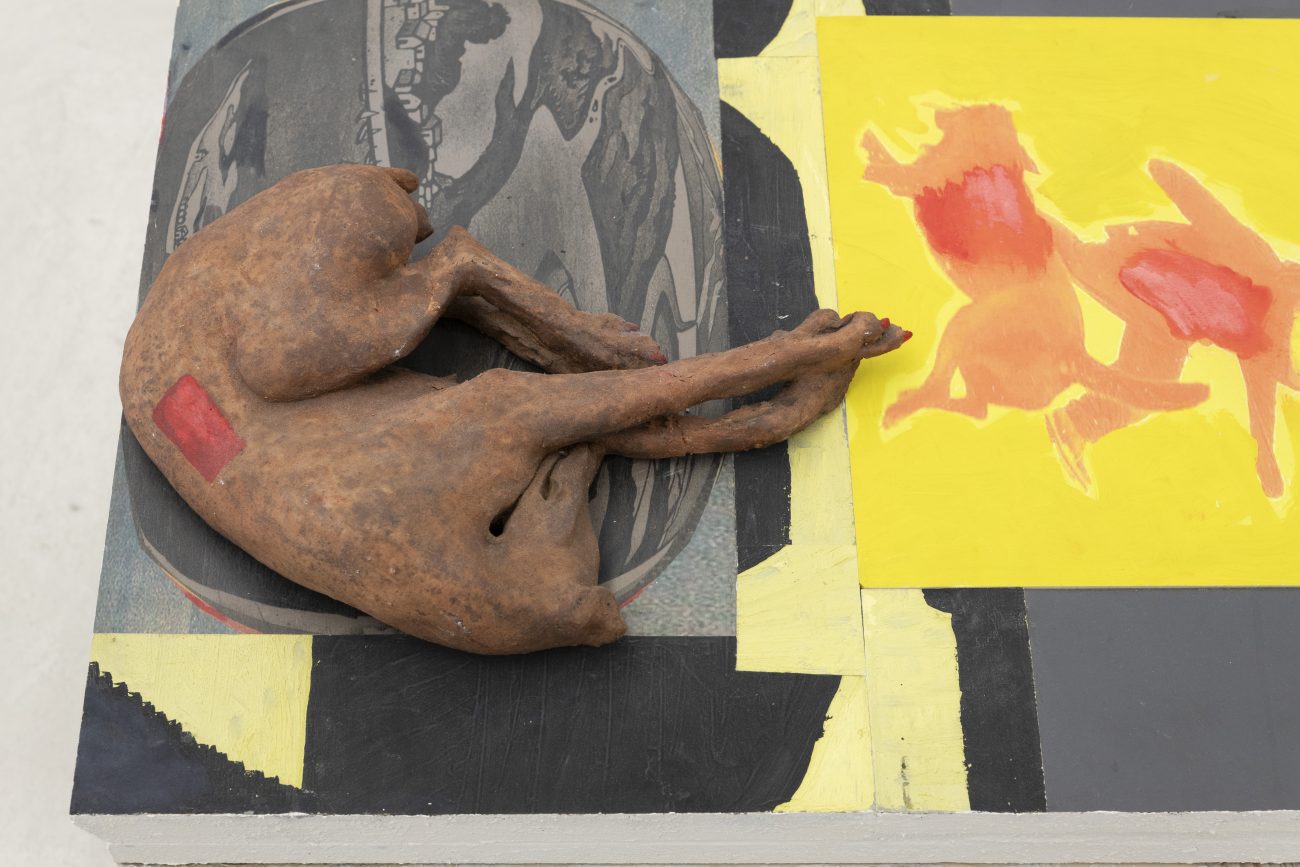
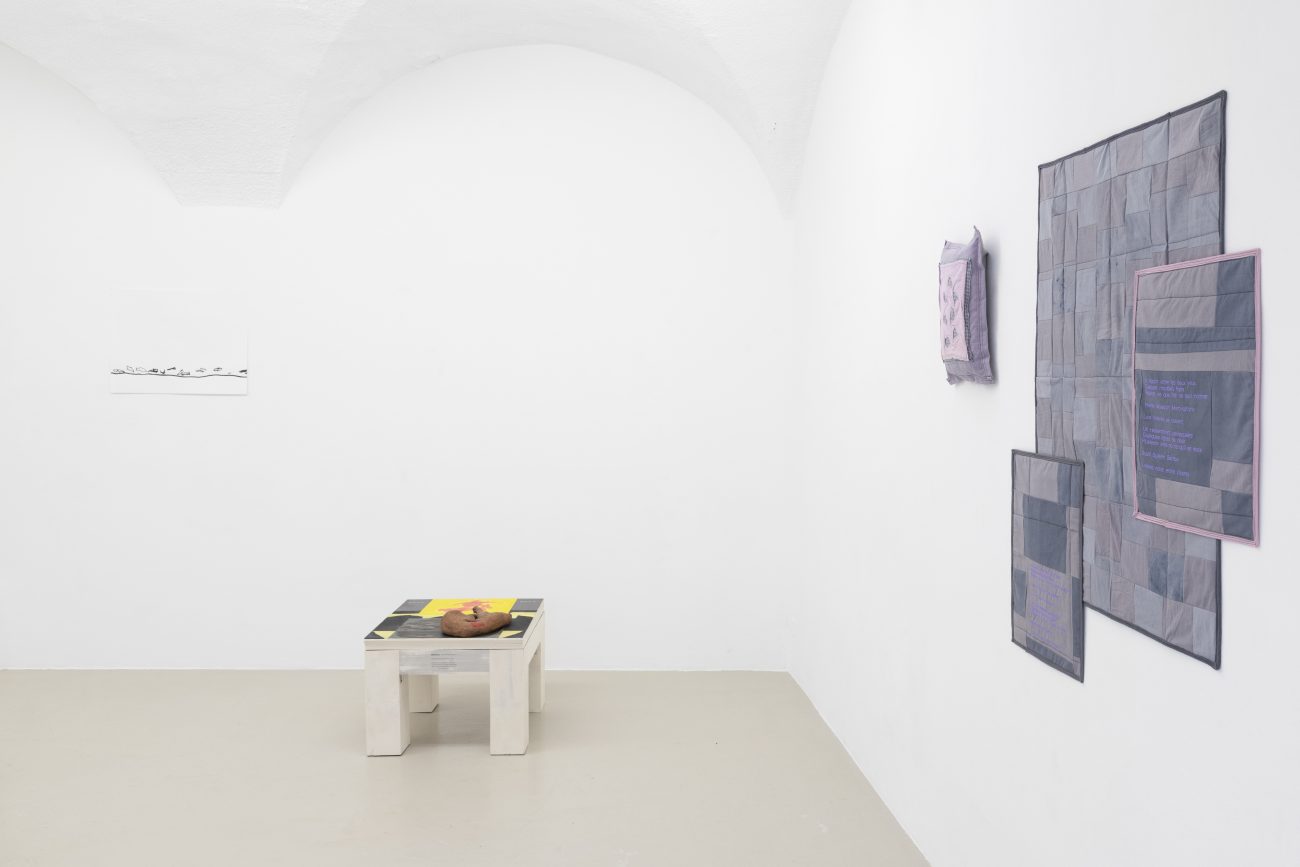
In e.n.o.s’s NECEDELE, her dog represented in clay quietly sleeps on a painted landscape. Slightly above it, the artist painted a screen shot from a video of them playing together, which adds a sense of wholeness to the piece. We catch a glimpse of different temporalities and states: sleep, dream, memories, even death. Indeed,e.n.o.s’s work addresses the relationships maintained with our loved-ones who passed away, which exceeds physical places and becomes part of an emotional, invisible and deeply intimate sphere.
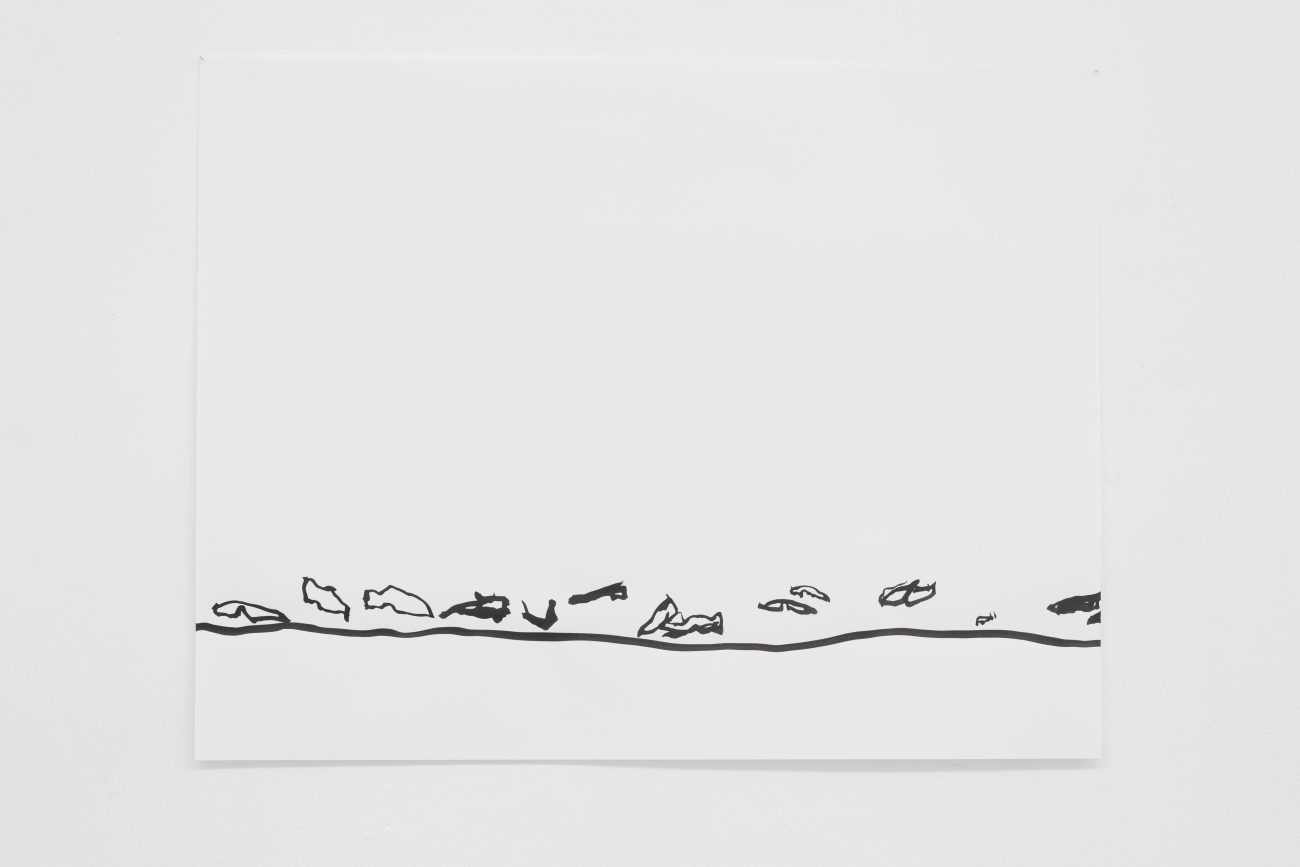
This consideration for invisible and long lasting connections resonate with Tristan Chinal-Dargent’s work. Whereas e.n.o.s explores emotional persistence through memory and presence of departed beings, Tristan is drawn to disappearance and hints left by absence which emerge from hollow spaces.
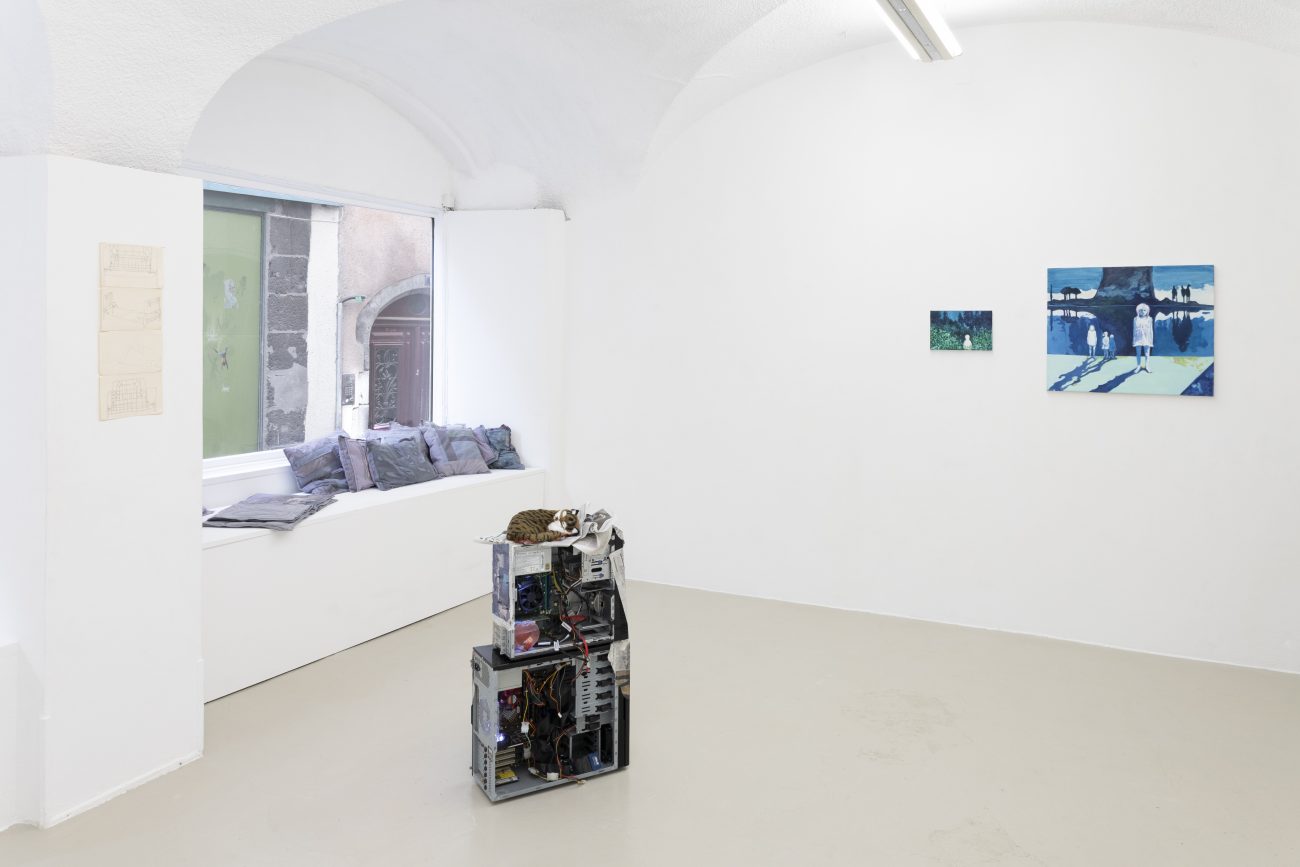
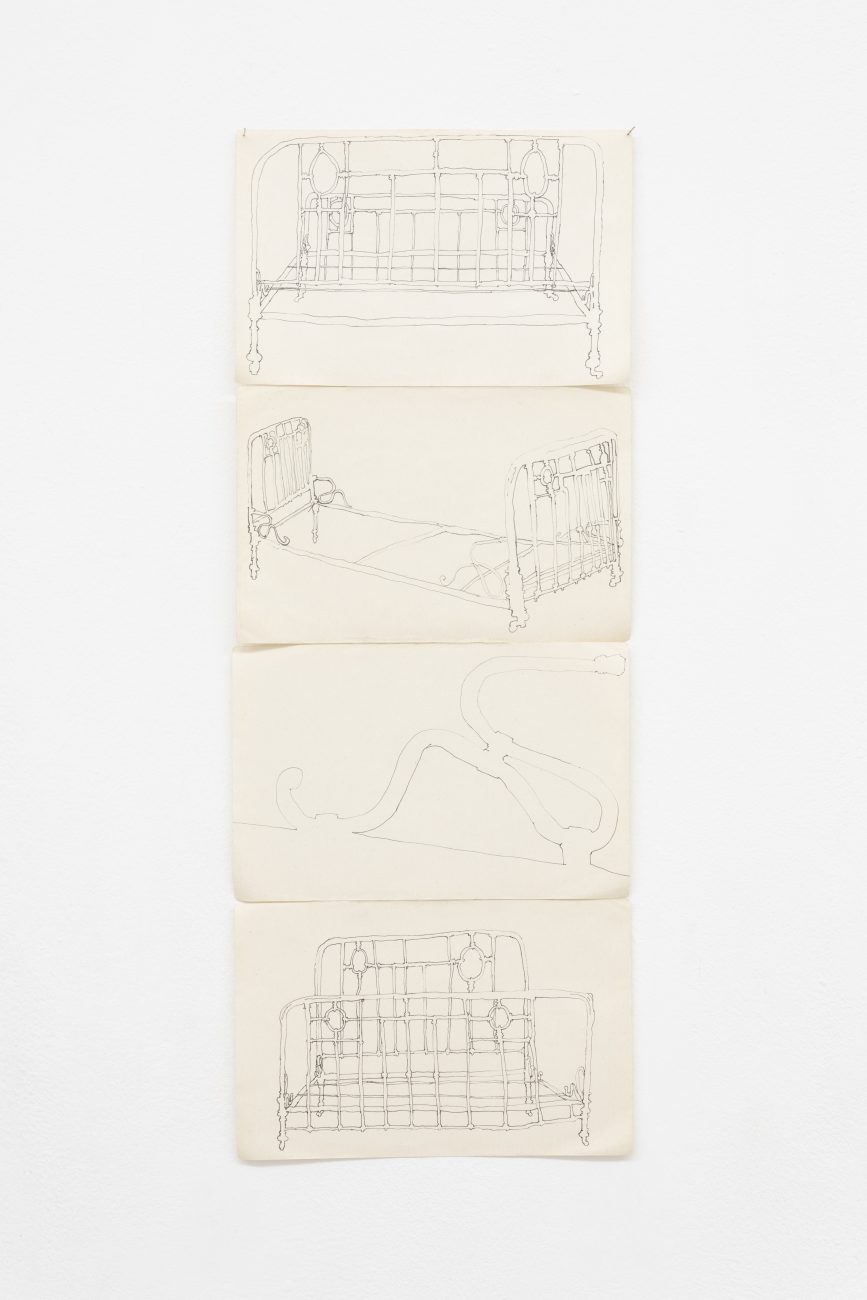
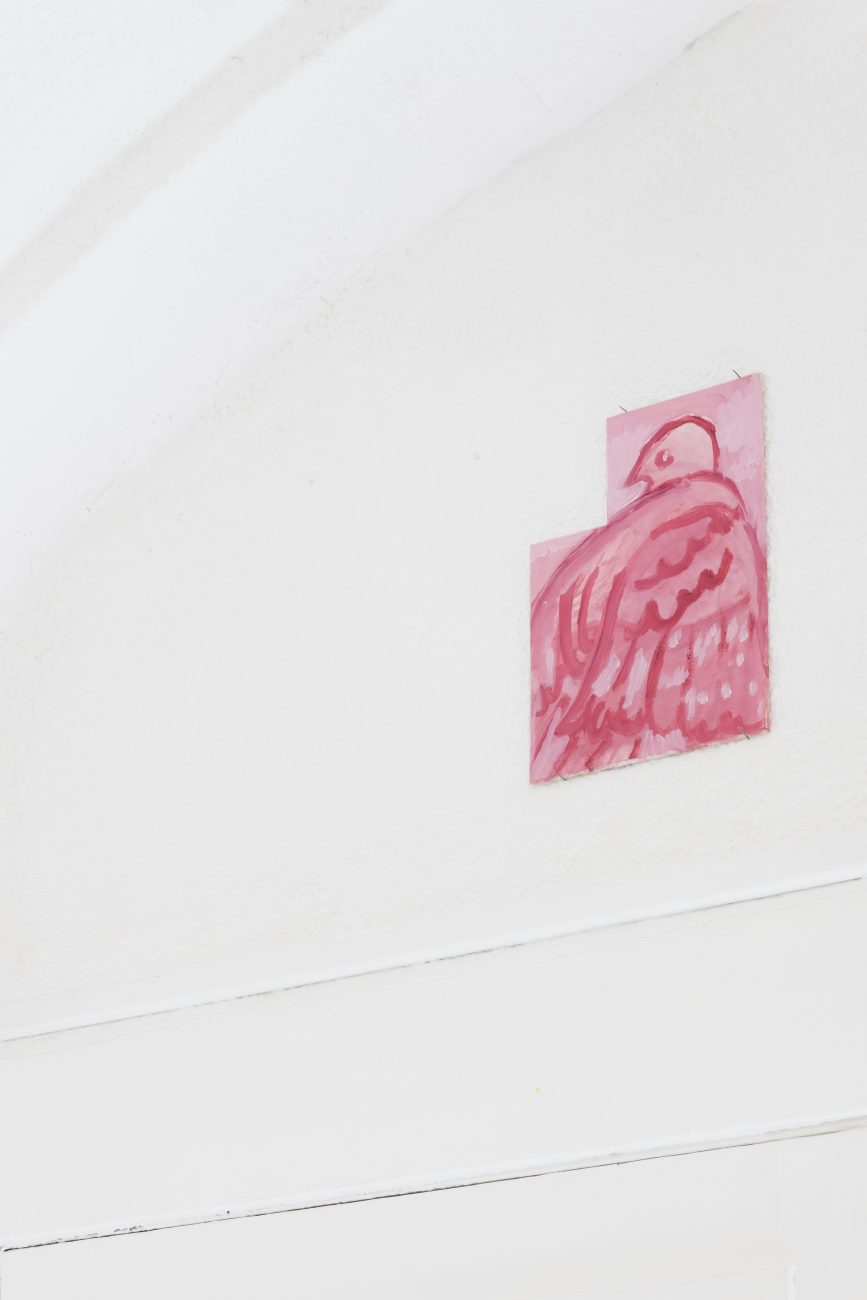
In Tristan’s LE TERRIER (enterrement à Ornans), one may recognize the shoes belonging to figures from Gustave Courbet’s painting evoked in the title. PRISONER’S CINEMA (Proust’s bed) introduces four different angles of one bed. Each of these drawings share the use of empty space to stimulate viewers’ imagination. L’OISEAU overlooks the exhibition space. It is saturated with pink: the only negative spaceof the canvas is the cut-off angle. Birds are everywhere around us, yet we rarely notice them, unless we decide to. Here, at In extenso, we have to look up to catch a glimpse of it. It embellishes the space it occupies and becomes a vague yet strong presence.
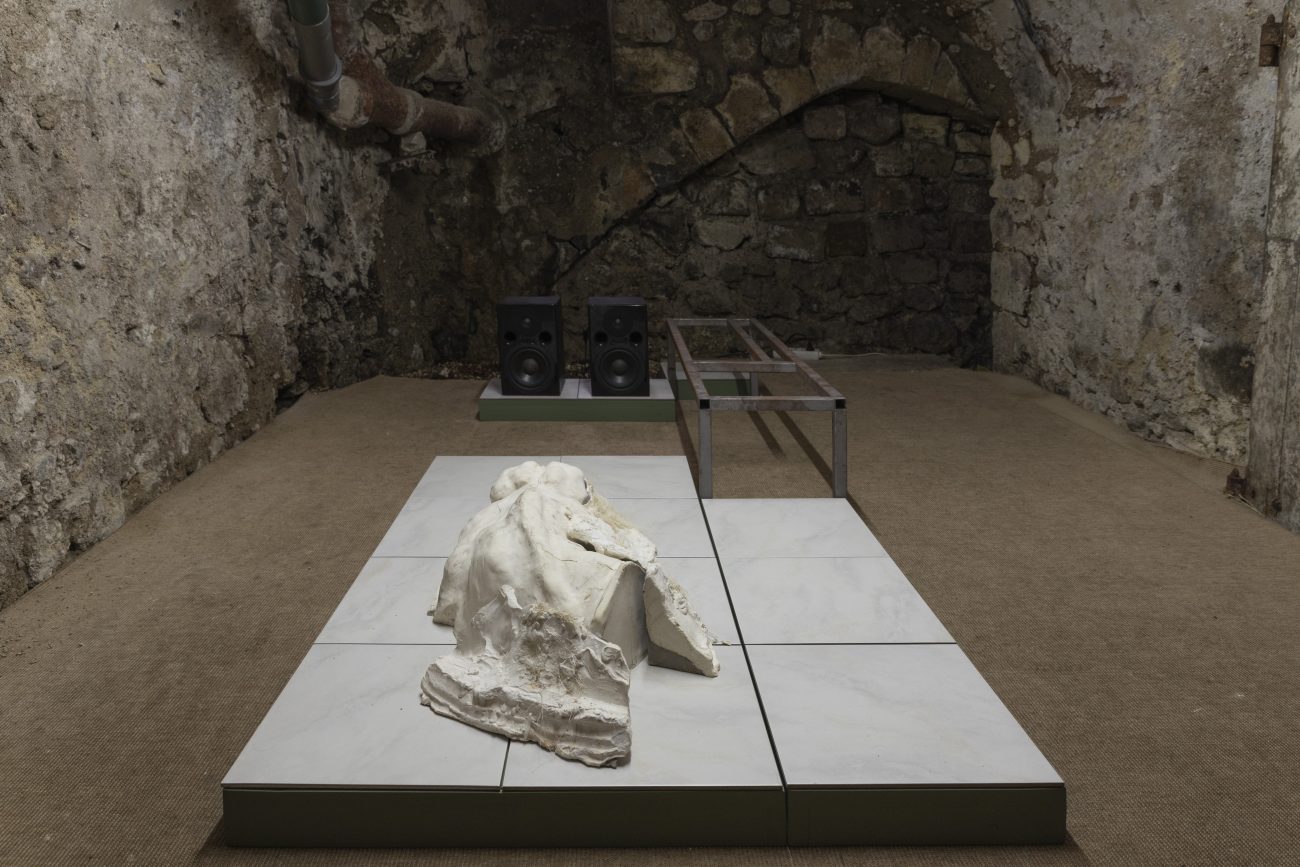
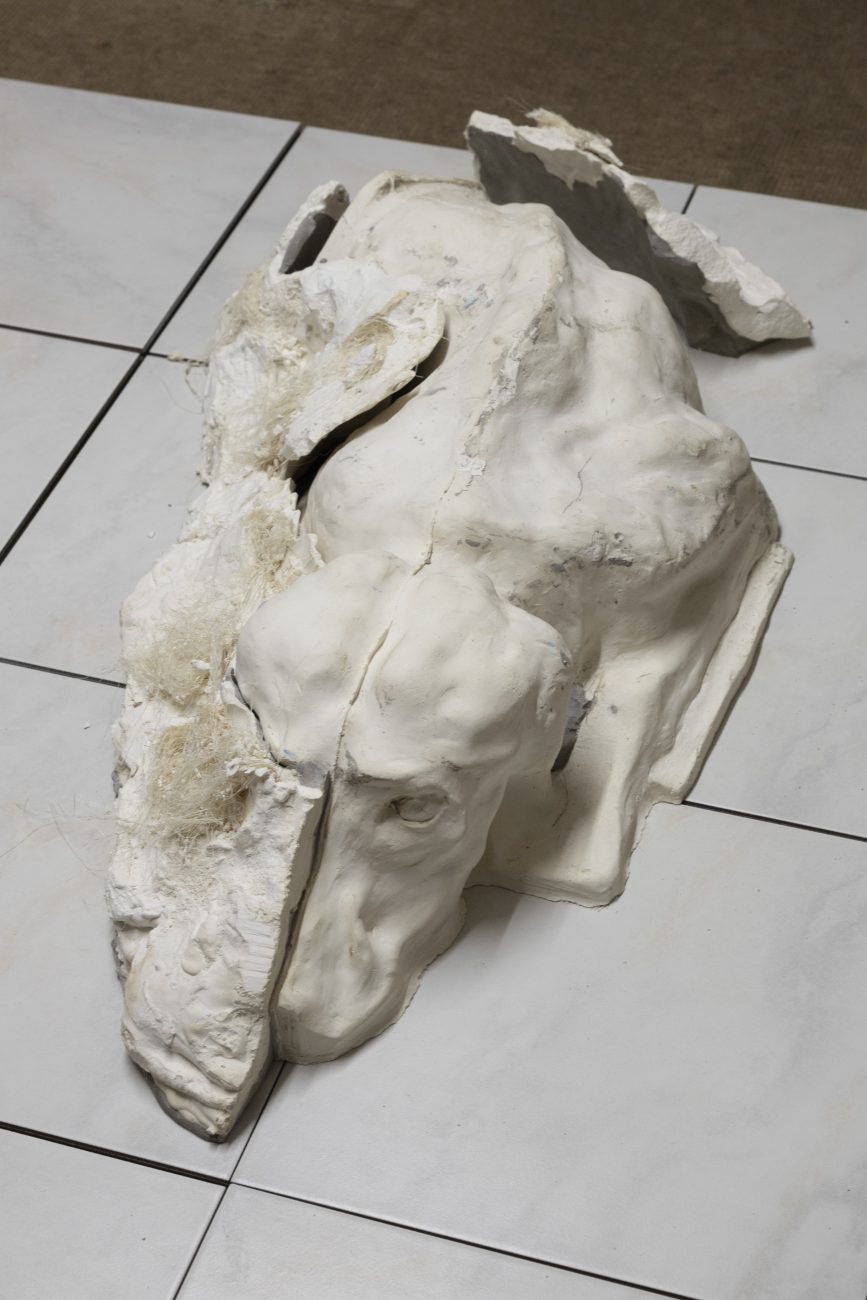
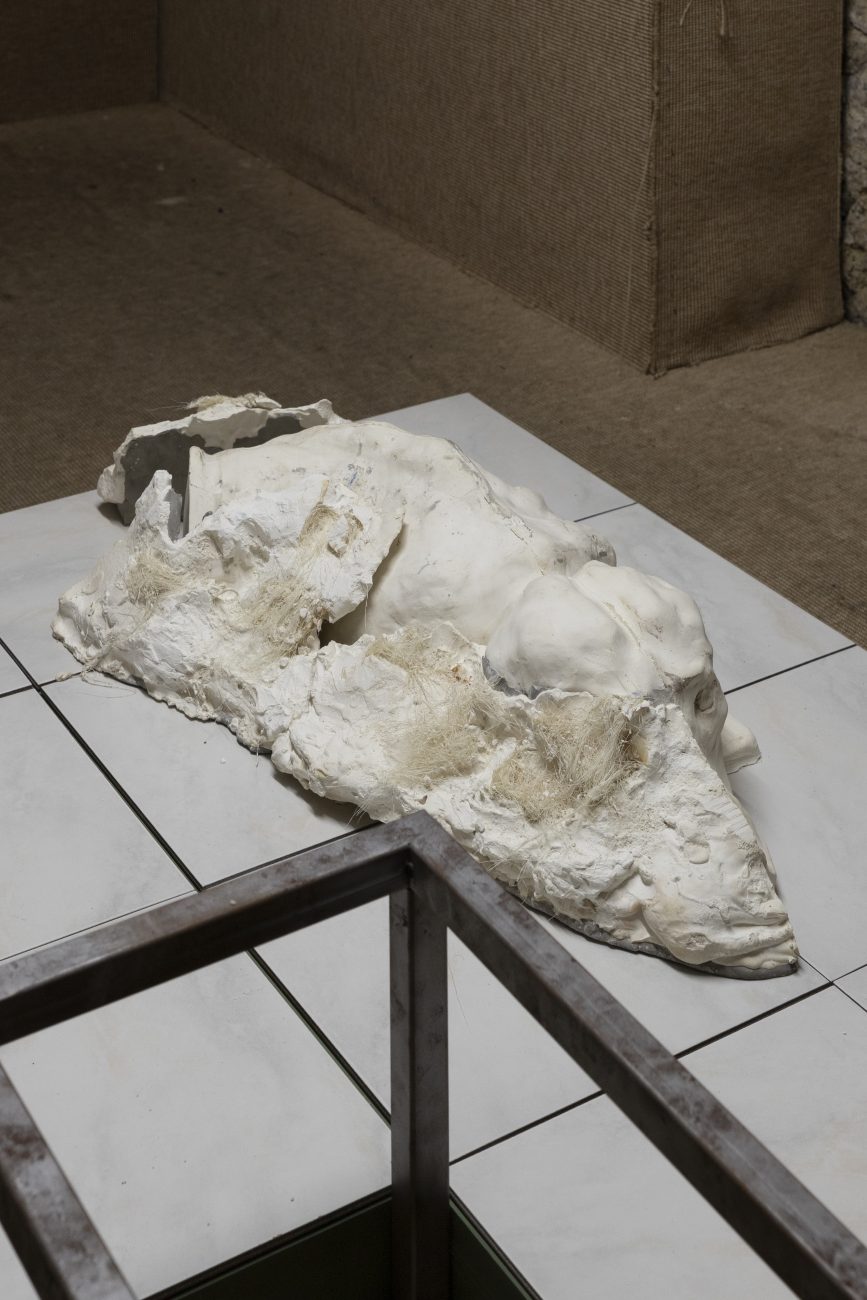
Sirag Sesetyan’s stray dog in Somekind of somewhere lays on a tiled floor, listening to Istanbul’s streets in a soundtrack recorded by the artist himself. Presented in the basement of In extenso in which floor grates allows sounds from the streets of Clermont-Ferrand to linger in the space, the installation bears witness to the collision of two cities through sound.
The dog’s environment transforms. It’s “at home” feeling is no longer a fixed place, but a recollection transported elsewhere. It turns the idea of a home upside down.
Material conditions rooted in reality may nourish imaginary worlds.
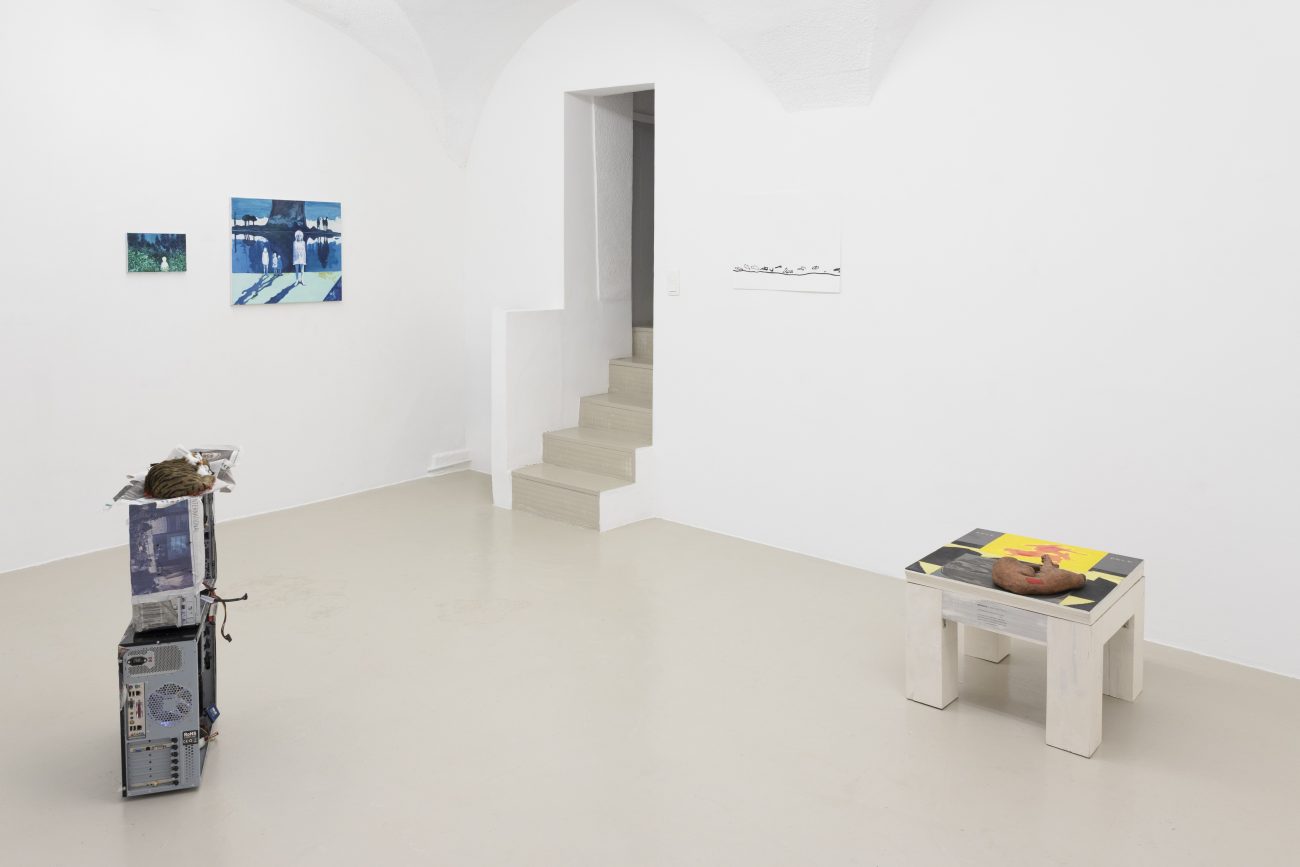
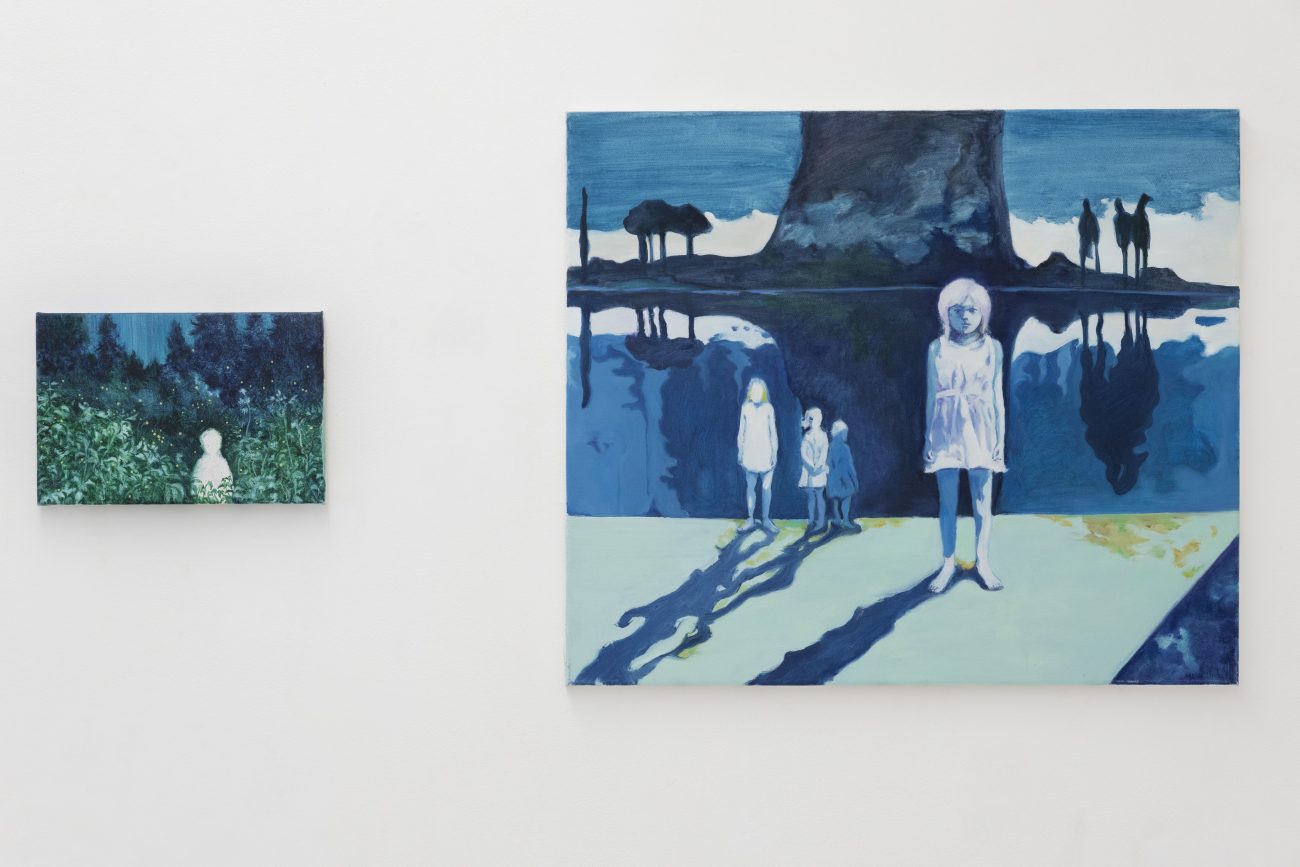
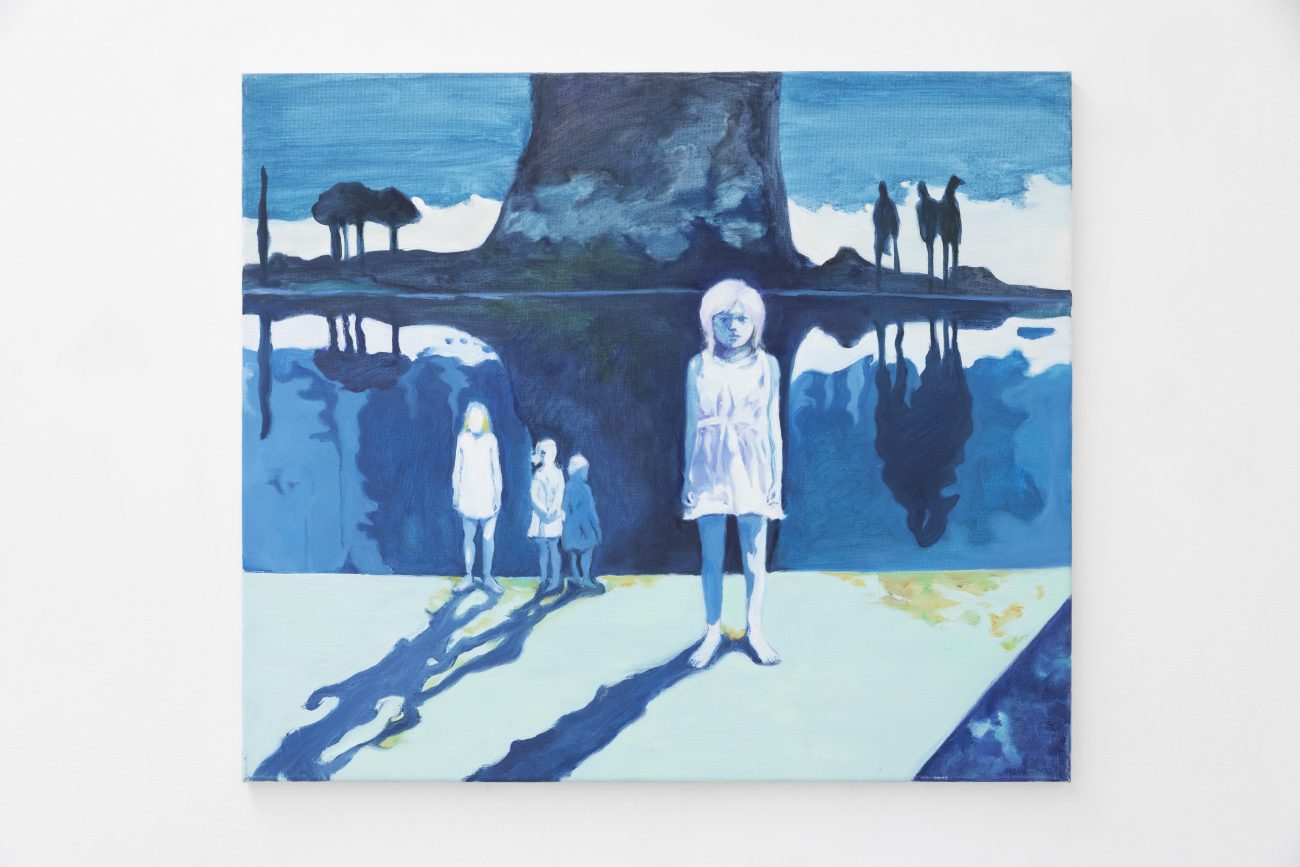
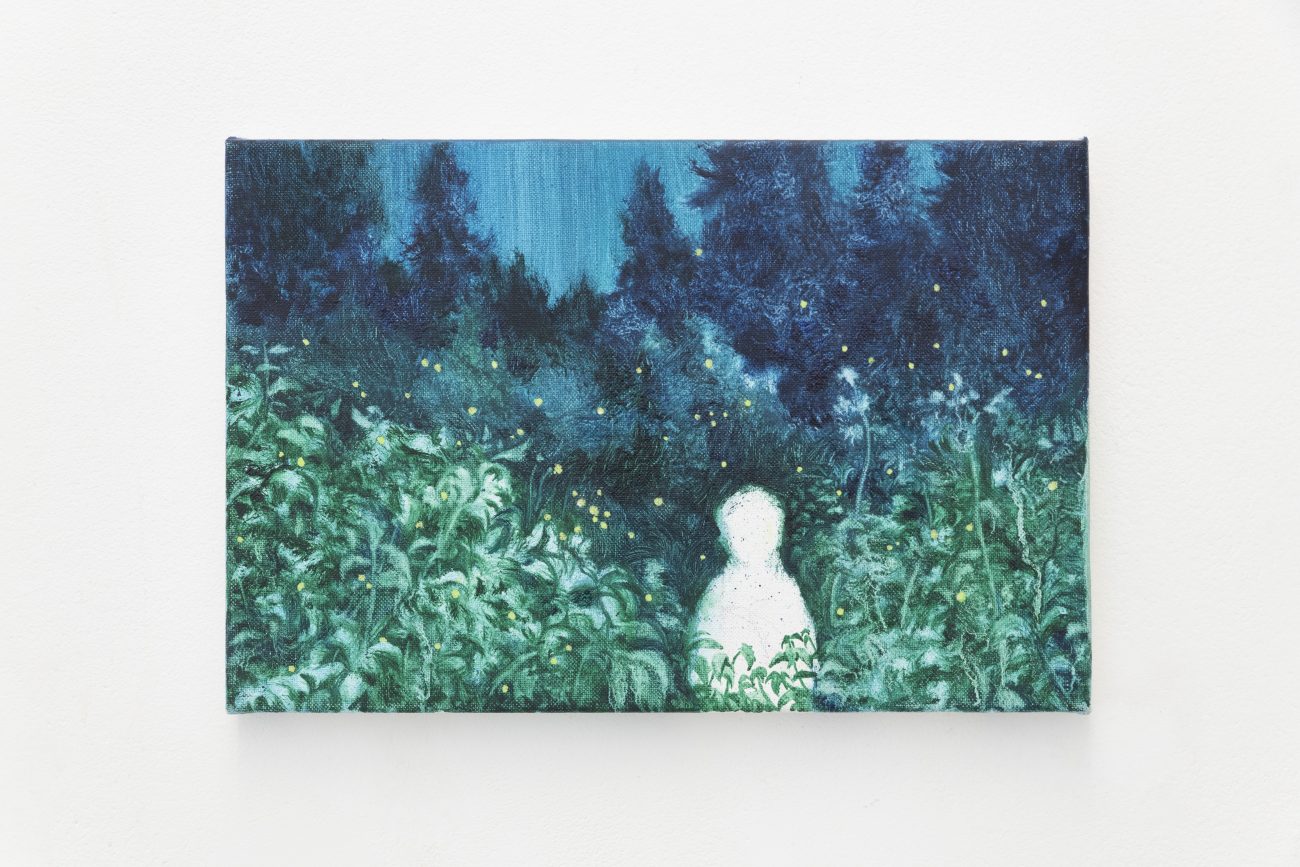
LinGe Meng combines his experience of being a father in France and growing up in China under the only child policy to create contemplative and dream-like landscapes including his fictional sibling. We consider it another living space. These canvases become home to anonymous figures and take us on a mental projection, as in a reverie-bound journey.
In contrast to Tristan Chinal-Dargent’s work where decor appears in between details, here blank space suggests absence and anonymity.
In what ways do our identities change when they come in contact with structures that surpass us, constantly adapt and reconfigure themselves?
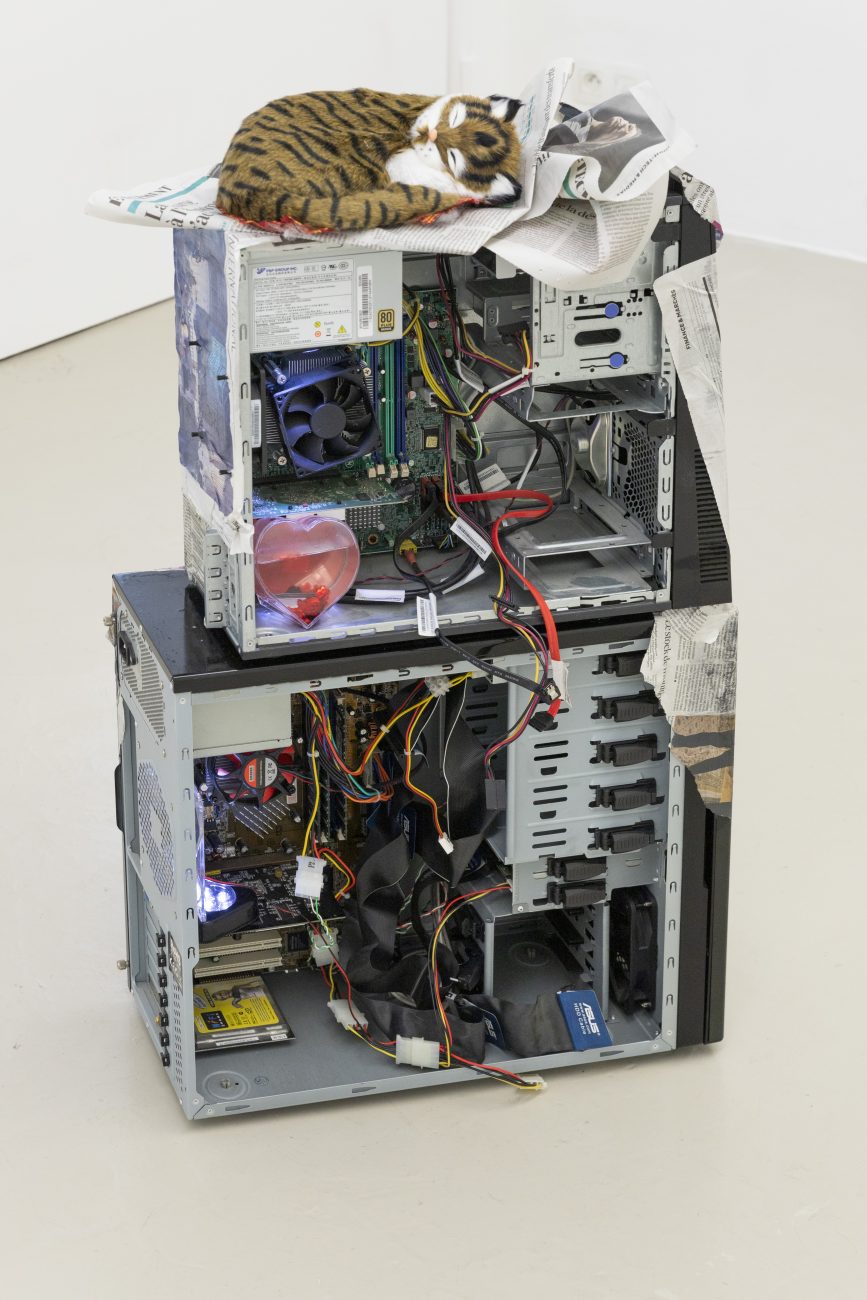
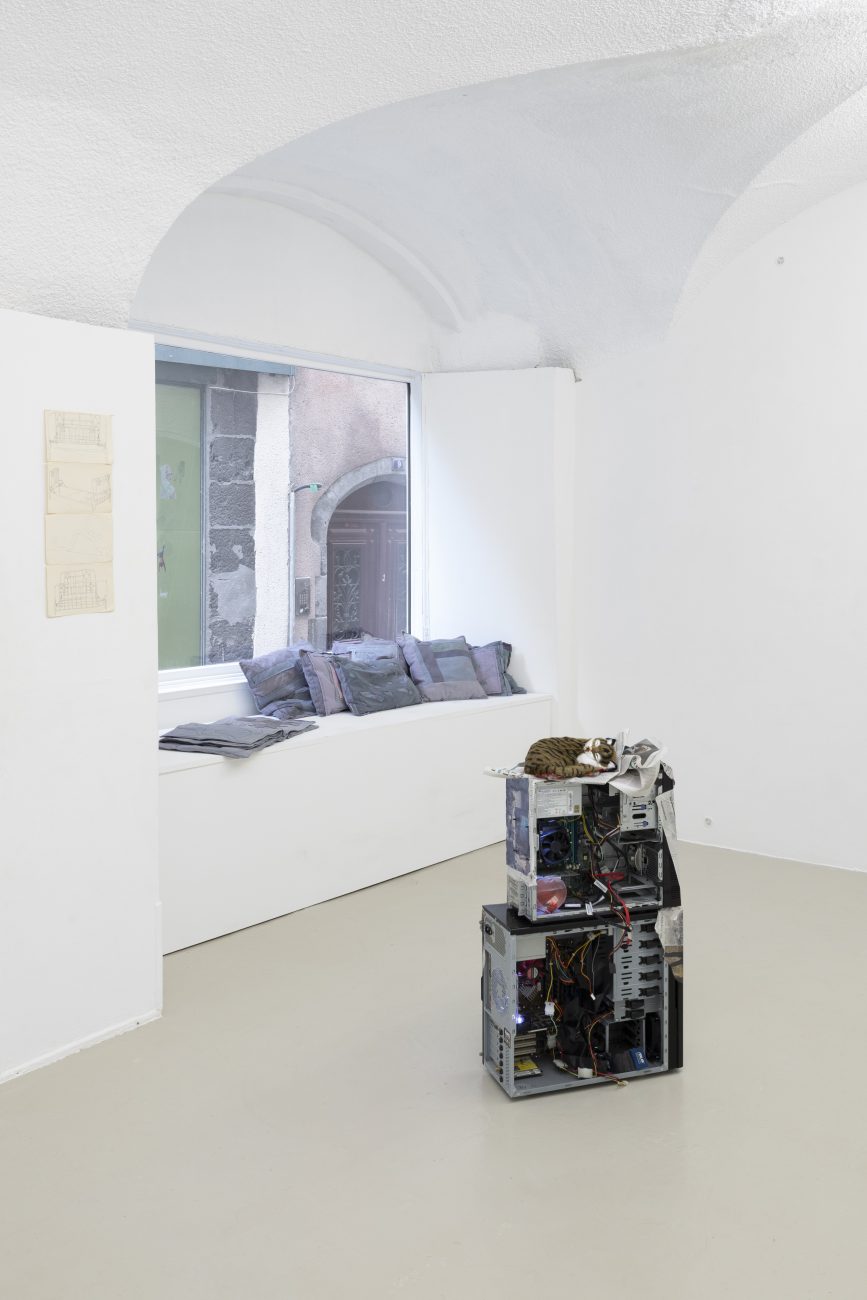
In R. Moreno’s PussPuters (2026), a plush toycat sleeps atop obsolete desktop tower covered in newspapers bearing economic and political news. For her, a living space is a set of algorithms, a mix of information that piles up and can’t be controlled. Yet, just like the cat, we may attempt to find shelter and adapt to these worlds surpassing us.
As opposed to R. Moreno’s PussPuter which materialises confusion between the outside and the inside, public and intimate, Tom Castinel attempts to reclaim places that forces us to adapt.
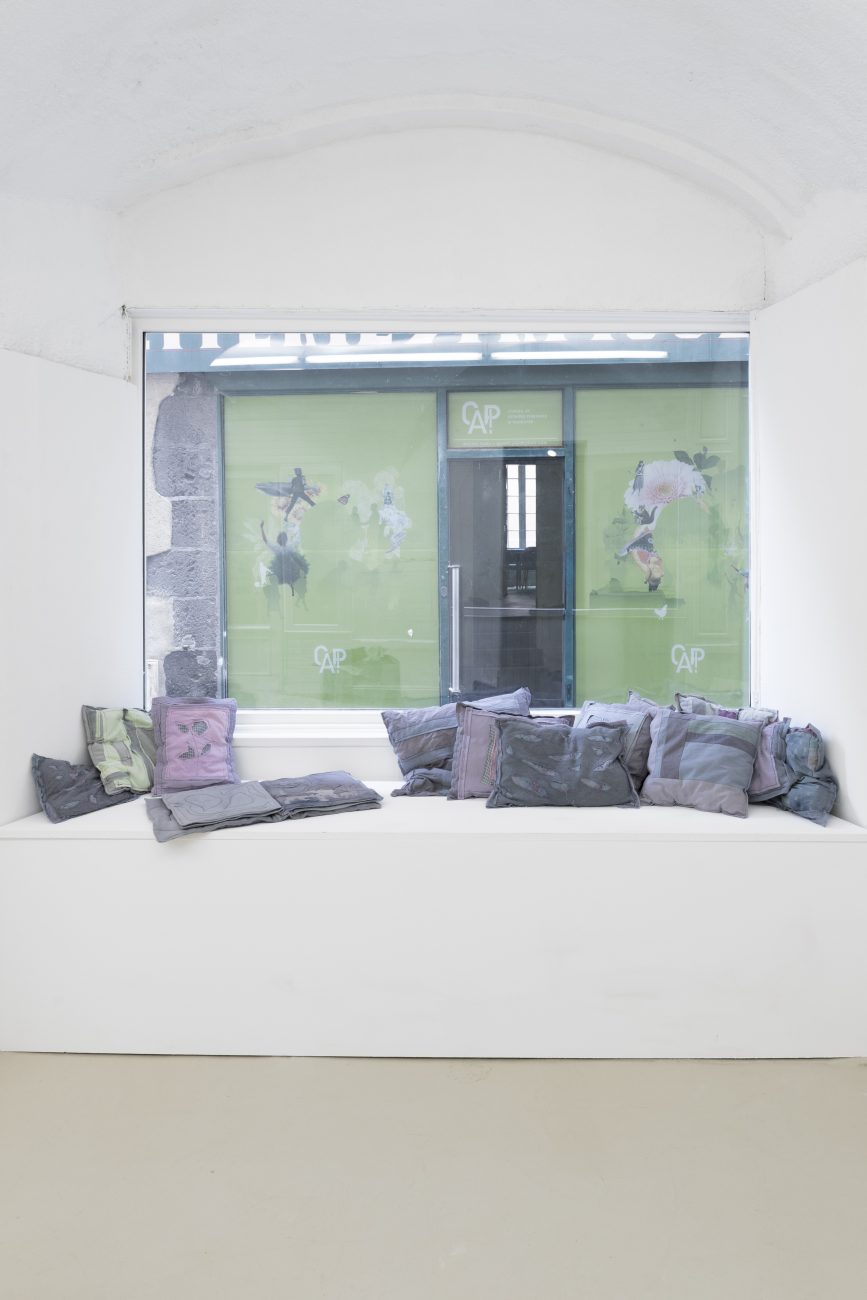
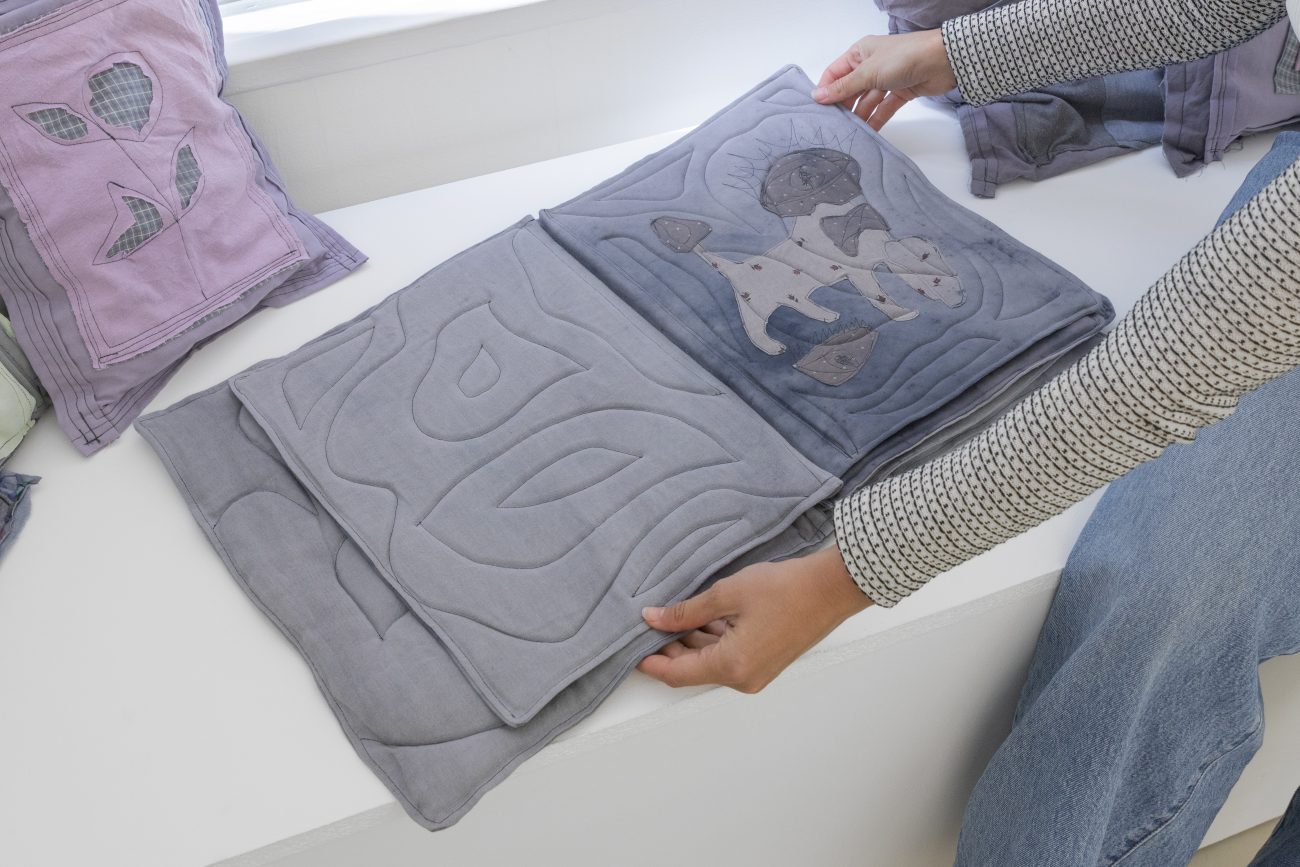
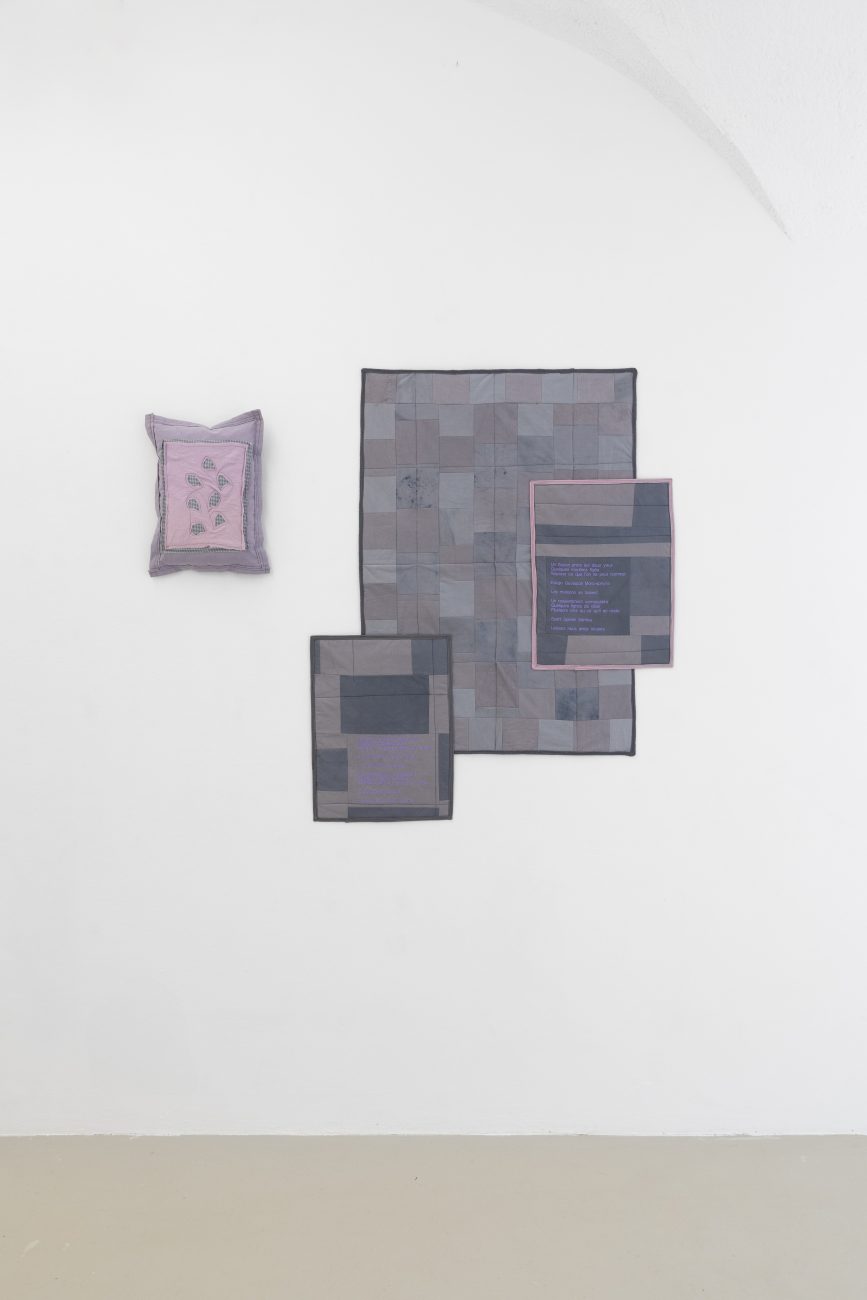
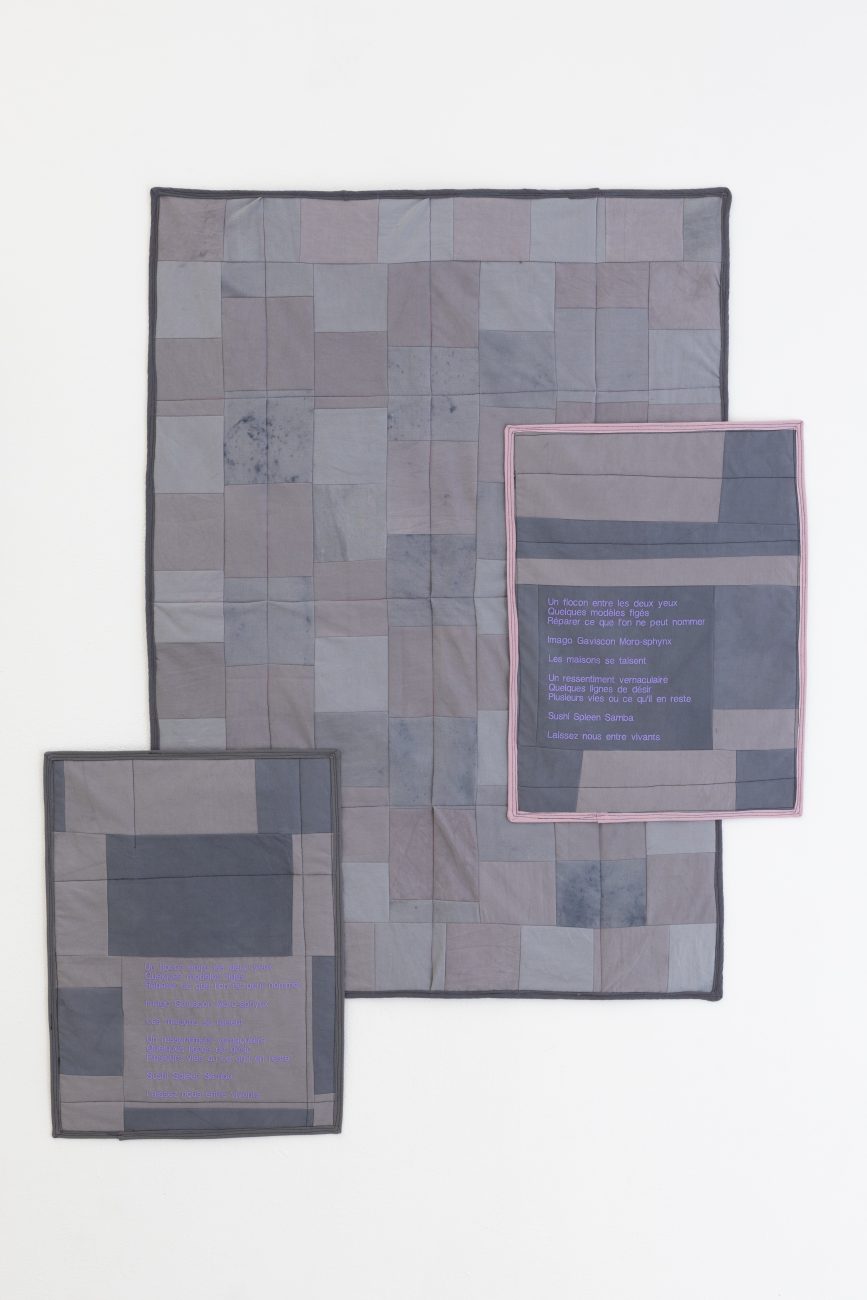
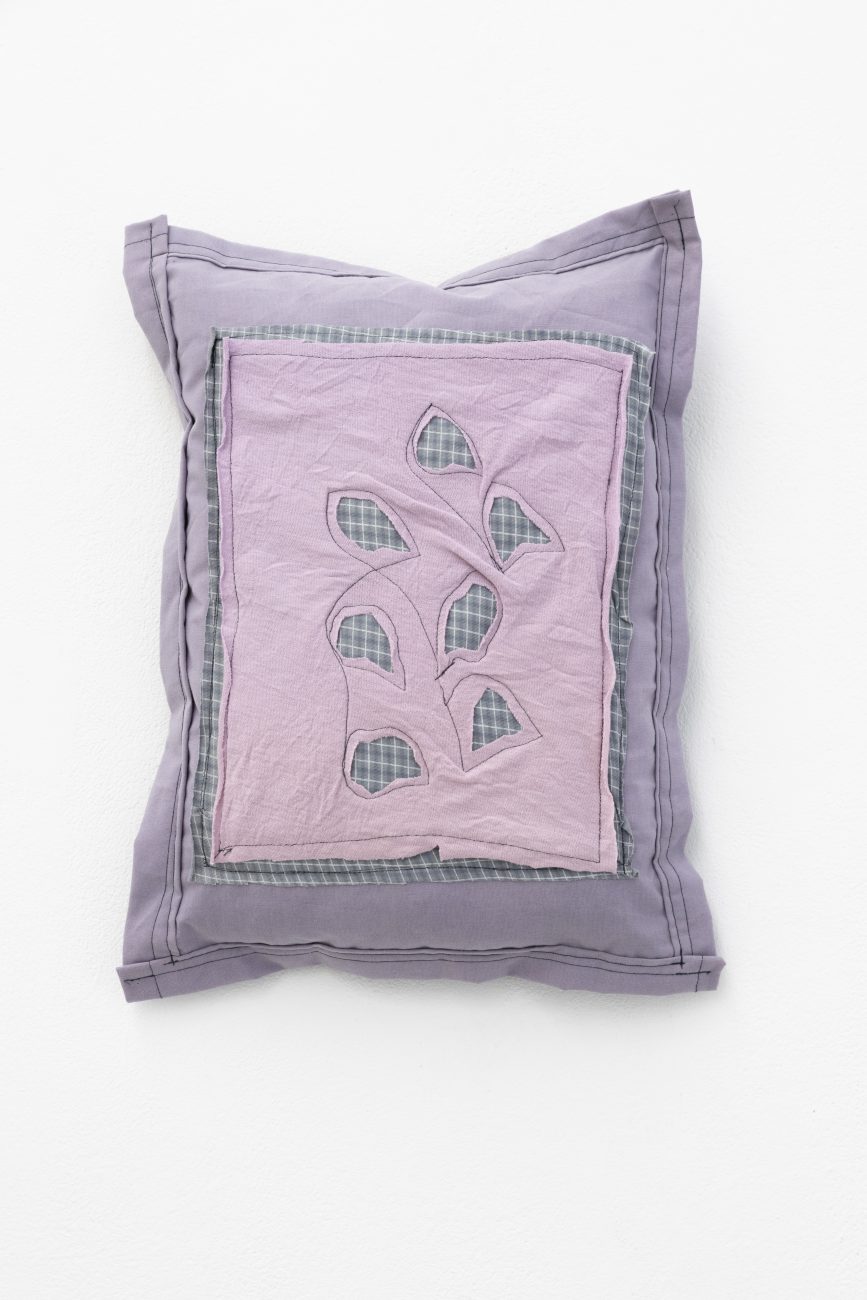
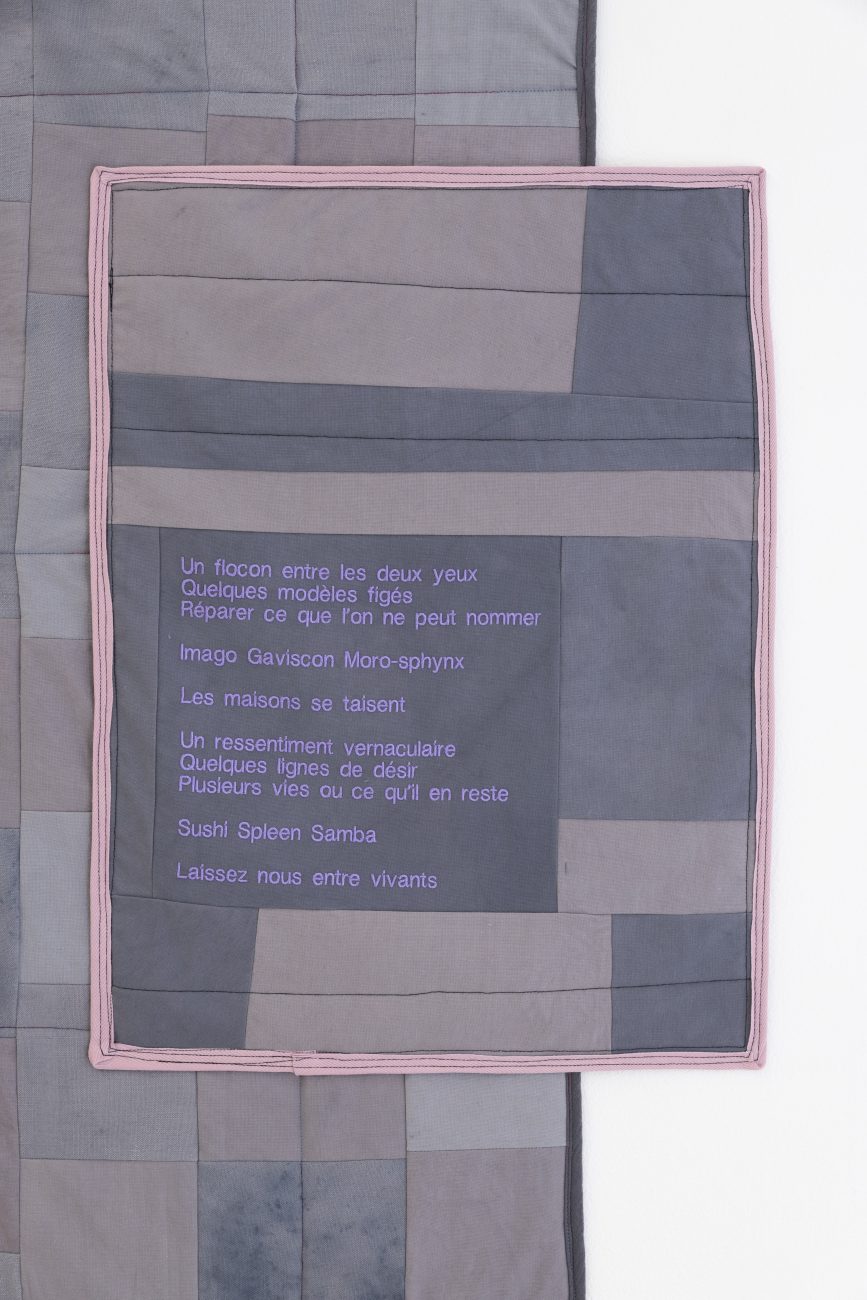
Pillow cases, bed sheets and books are examples of domestic archetypes extracted and moved out of context by Tom in his practice, questioning inhabited worlds and statuses of objects. He thrifts fabrics and dyes them in shades of grey, sometimes embellished by patterns or words in order to create welcoming environments. “Les maisons se taisent […] Laissez nous entre vivants [ Houses go quiet […] Leave us living beings alone together]”. These words resonate in this exhibition and aim to create a calm cocoon. A place for and by the living.
- Rokha :
The feeling of aliveness in a place comes from the relationships that evolve and exist through it.
Us, the students, and the relationship we built brought about an environment that welcomes our instant favorite pieces, our ideas, our conversations and turns it into something familiar.
The exhibition venue of In extenso turns into a place we inhabit and spend time in, that we shift to inhabit and that we shape by the simple fact of being in it.
In what ways thinking about a place has us living in it? Do we choose our living space or are some places simply likely to be inhabited? In what case does our living space shift into a new living space ?
- Sofiia :
“The art of being there and perceiving what happens.”²
I remember the selection process for this exhibition: a sort of immediate bond occured between the works and us, the viewers. As if the pieces chose us in the same way they were being chosen. As if we’d let the works talk before us. The building started by observation, attention and presence. Unconscious, invisible ties started to come into being. The approach of making intuitive and emotional choices also means letting oneself be passed through by what the work has to say. “To pay attention to, and become aware of the ways other beings carry attention. It is another means to declare importances.”³ We envisioned letting the works meet and tell each other stories. Then, it is our turn to listen to them and make visible what is already looking at us.
- Eli :
We took a careful approach when it came toour moments of discussion, thinking and sharing:
From the start, during our first few conversations, we told each other we’d pay attention to one another. We decided to think together, based on what we had experienced, what we had seen, who we had met….
My perception of what a living space is has changed since we first started the project. I know it will change again, that it will evolve with the reactions and discussions about this exhibition.
We made plans, we used a model, we imagined. We built it starting from a space. We populated this place with creatures, dogs, cats, birds. And with memories too, and also beings that exist but can’’t be seen. Maybe we brought all these creatures here so as not to feel alone?
- Anna-Livia
My perception of what a living space is has also changed. To me, the core of the project can be traced back to studio visits and the precious interactions it led to.
Thinking back to these encounters, I notice a shift in the studio space, we bring intimacy and vulnerability in it. It’s a place we tame, that we get to know, a space we build routines and landmarks in to get ready to create to be precise. We create an environment that allows us to become familiar with a new place.
In this case it seems to me that these living spaces demand constant adaptation. We constantly face confrontation with others or ourselves, which suggests being ready to accept the difference implied.
- Salomé :
To me, what brought us together for this exhibition is the feeling of fragility.
How do we feel safe when our living spaces make us feel vulnerable? How do we make them a little softer while respecting each other’s means?
I enjoyed sharing this very vulnerability with my mates, these people I didn’t really know prior to this project, yet connected thanks to these pieces that moved us in some ways. Anyway I think it is emotional and tied to many aspects of what we see as “domestic”, all relationships tied to it.